Mixed-media sculptural installations, 2016–2022
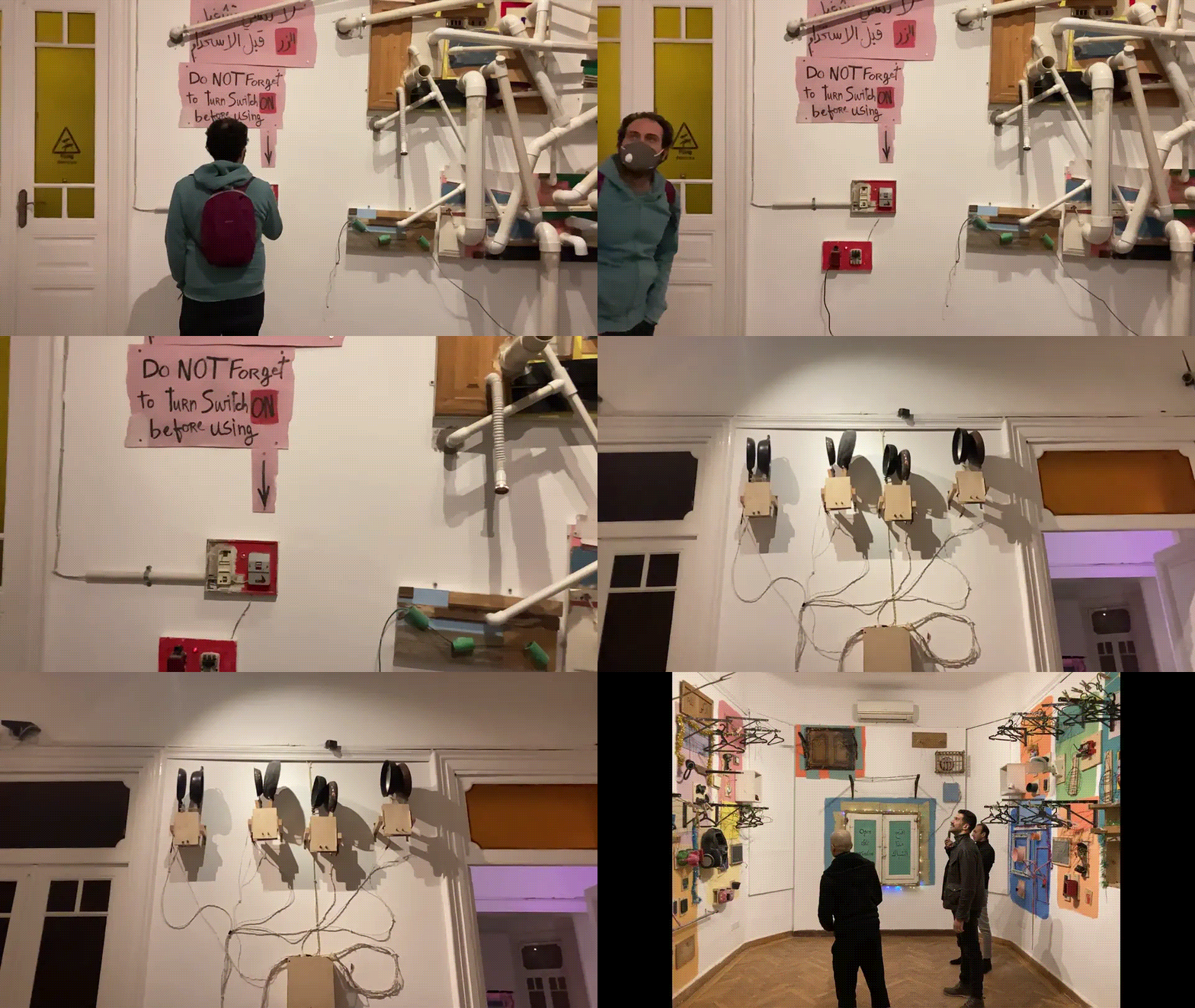
To see a full video tour of the Medrar and Gypsum exhibitions, click here.
Having been raised in Cairo, I have long been intrigued by the visual culture of clutter that dominates the city. With time, I noticed that this clutter was a defining feature of government institutions and bodies — what I came to call the “Institutional Aesthetic”: a complete disregard for visual effect, as long as the object fulfills its original function. I began documenting its manifestations in 2012, during numerous visits to governmental institutions to procure official papers or fulfill similar errands. I eventually concluded that these bodies are the source of a perplexing visual phenomenon that extends to the street in a myriad of forms — from official signposts stressing the state’s ownership over a piece of land, to sculptures in public spaces commissioned from “artists.” A number of these became famous on social media as objects of ridicule; an example is the crudely rendered replica of Queen Nefertiti’s bust placed in 2015 in the Minya governorate, where the original bust was found. The Institutional Aesthetic naturally extends to the daily practices of Egyptian people, manifested in haphazard solutions to all types of problems.
Does this phenomenon reflect a particular philosophy of management? Does its effect go beyond the contradiction between the authority of the state and its visual means of expression?
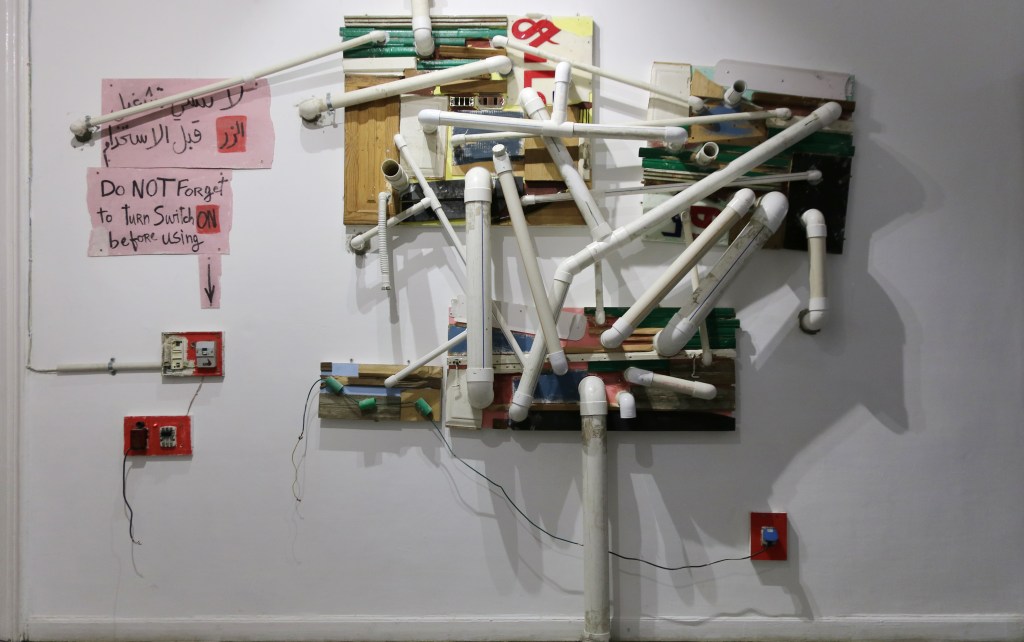
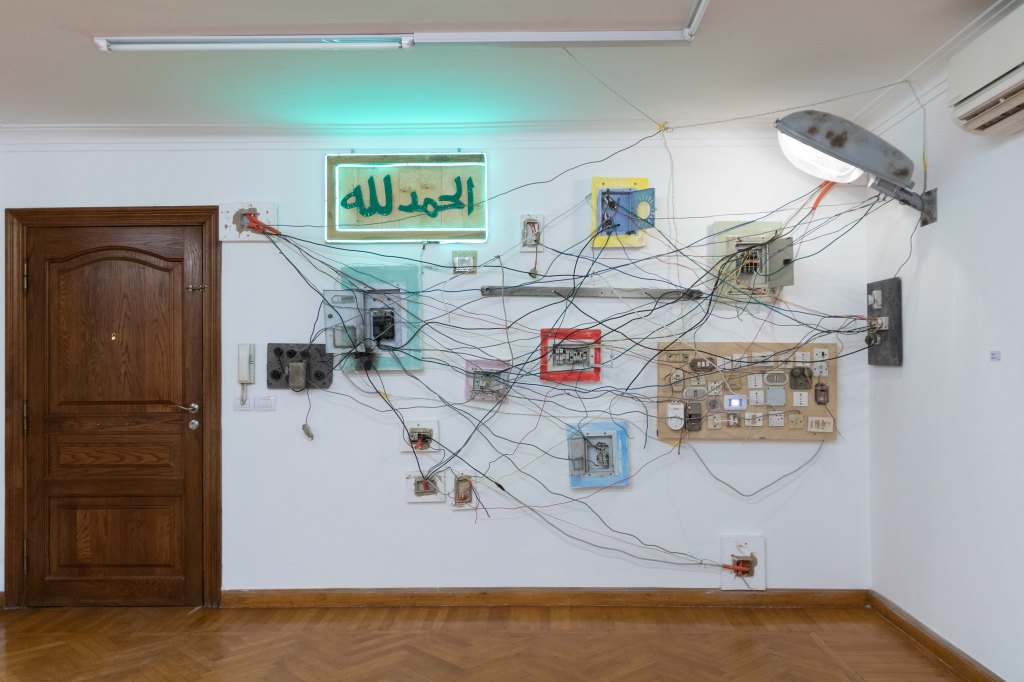
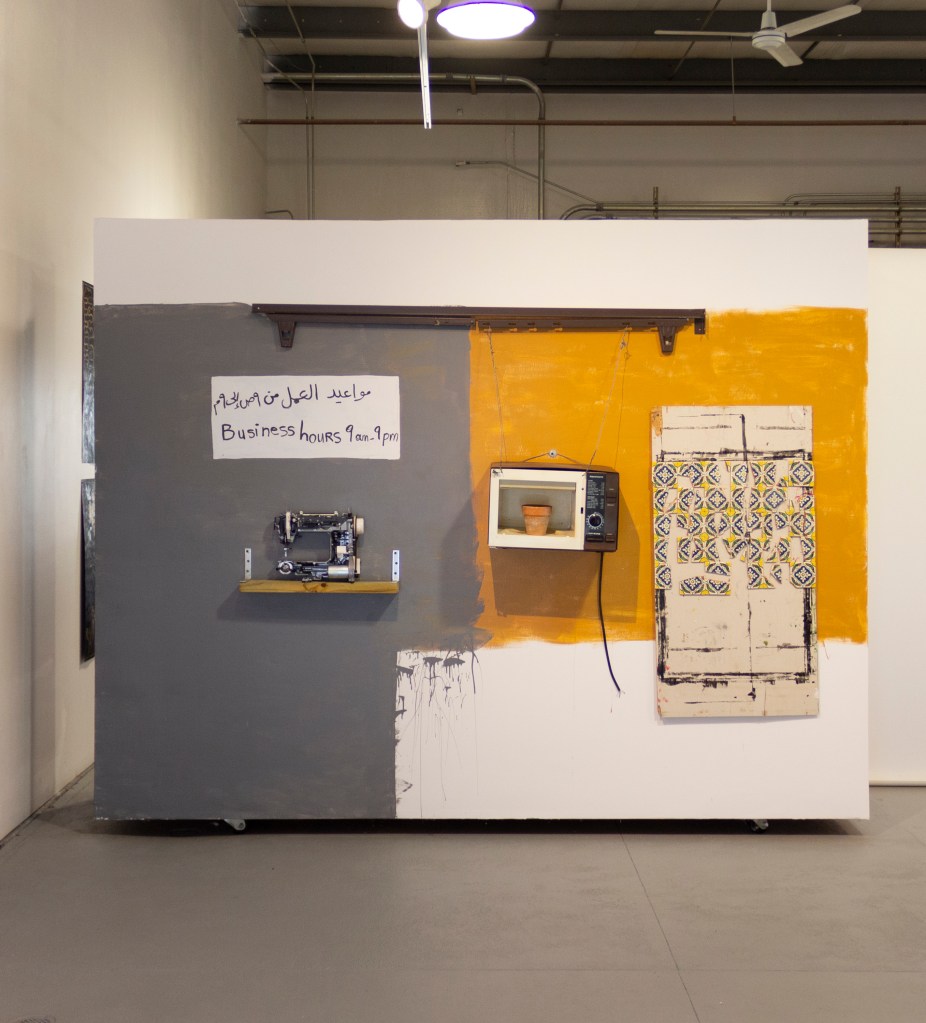
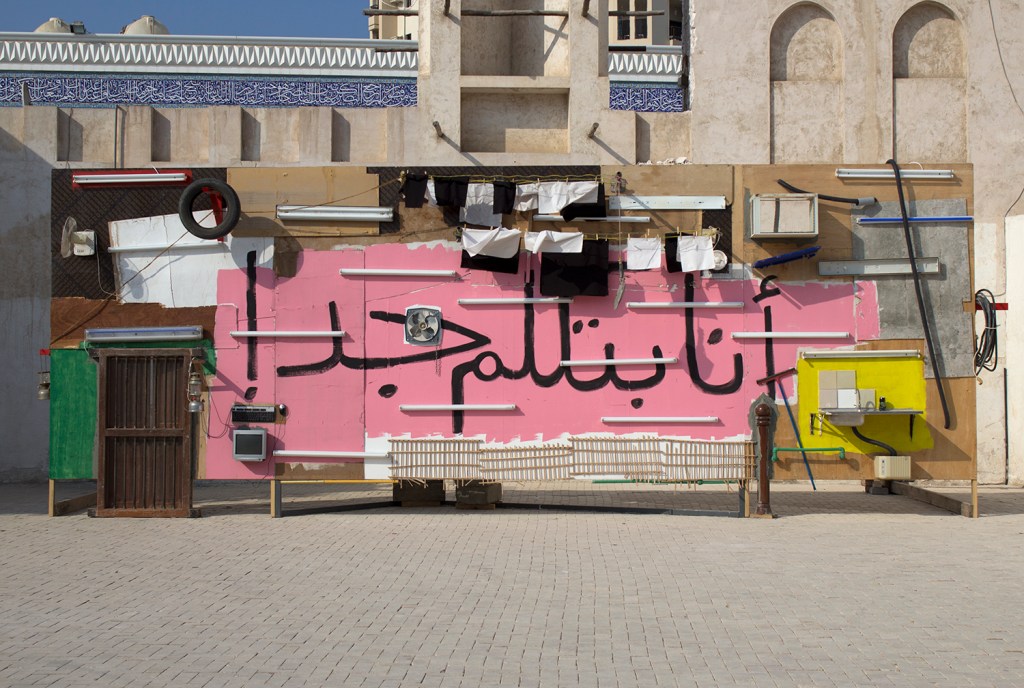
Expanding on a work I created in 2013, The Official Institution, Guideposts is a series of sculptural pieces begun in 2016 that adopt this aesthetic — investigating the culture of clutter and visual chaos by removing it from its original context and placing it under scrutiny. The works generally address the audience through written statements or instructions that contrast sharply with the chaotic appearance of the work itself. In doing so, I want to examine the relationship between the authority the work attempts to maintain and the reactions it provokes.